
If you want to keep clients happy—and keep them coming back—it boils down to three things: proactive communication, airtight expectation setting, and a structured feedback loop. When you get these right, you shift from just reacting to problems to building genuine partnerships. It’s not about luck; it’s about having a solid system in place that builds trust from the get-go.
The Foundation of Unbreakable Client Relationships
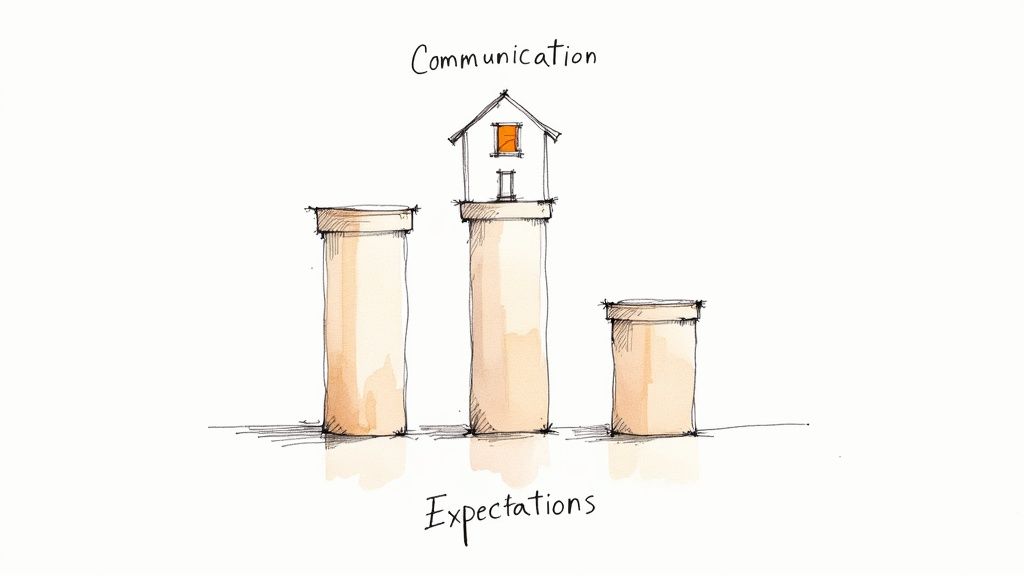
Let’s be real. Client satisfaction isn't just a feel-good metric. It's the engine that drives a successful creative business, directly impacting everything from your profit margins to the quality of clients you attract. Happy clients don't just pay invoices; they become your most effective marketers.
The payoff is both tangible and immediate:
- Consistent Referrals: Thrilled clients naturally tell others about their experience, creating a steady stream of warm leads.
- Higher Retention: It's way cheaper and easier to keep a great client than to land a new one. Loyalty is built on great service.
- Premium Rates: A portfolio full of glowing testimonials gives you the leverage and confidence to charge what you're truly worth.
Why Every Interaction Matters
In a crowded market, your service is what sets you apart. The numbers don't lie: a staggering 99% of consumers say customer service impacts their buying choices, and 74% consider it a top priority. On the flip side, the consequences of getting it wrong are harsh—70% of customers will walk away after just two bad experiences. If you want to dive deeper, you can explore more insights on customer experience to see just how critical these touchpoints are.
To really nail this, let's break down the core strategies into three pillars. This table gives a quick overview of what to focus on.
Three Pillars of Client Satisfaction
A quick look at the core strategies that form the foundation of an exceptional client experience.
| Pillar | Core Action | Key Outcome |
|---|---|---|
| Proactive Communication | Regularly sharing updates, anticipating questions, and maintaining transparency—even when there's bad news. | Builds trust and prevents misunderstandings before they start. |
| Airtight Expectations | Clearly defining project scope, deliverables, timelines, and communication channels from the very beginning. | Creates a shared understanding and eliminates "scope creep." |
| Structured Feedback | Implementing a consistent and easy-to-use process for gathering and acting on client revisions. | Speeds up the revision cycle and makes the client feel heard. |
These three pillars are interconnected; strong communication makes setting expectations easier, and a solid feedback system reinforces both.
The core of excellent client service isn't about grand gestures. It's about consistency, reliability, and making the client feel heard and respected throughout the entire project lifecycle.
This guide is all about actionable strategies, not just buzzwords. We’ll show you how to build systems that encourage real collaboration. It’s why we created Reviseo—to eliminate the ambiguity and friction that so often derail creative projects. Our focus on clear, visual feedback is a direct response to the challenges we’ve all faced. You can learn more about our mission to improve collaboration and see how we're helping freelancers and agencies turn client management into a repeatable, profitable process.
Crafting a Bulletproof Onboarding Experience
Most client friction doesn't just pop up halfway through a project; it almost always starts with a messy beginning. A vague or rushed onboarding process is the perfect breeding ground for misunderstandings, scope creep, and a whole lot of frustration down the line. If you want happy clients, you have to design an onboarding experience that systematically stamps out ambiguity from day one.
Think of it like laying the foundation for a house. If the concrete is uneven or poorly mixed, everything you build on top of it will be shaky. That initial phase of your client relationship is your foundation. Getting it right is the key to preventing future headaches and setting up a smooth, professional partnership.
Setting the Stage with a Kickoff Meeting
That first real meeting after the contract is signed is your kickoff. This isn't just a formality; it's your golden opportunity to get everyone aligned and set the tone for the entire project. The number one goal here is to leave that meeting with absolutely zero confusion about what happens next.
Your kickoff agenda needs to go way beyond just project goals. You have to get into the nitty-gritty of communication. For example, are you having a weekly check-in call every Friday at 10 AM? Or will all communication happen inside a project management tool? Nailing these rules down early prevents the client from feeling ignored and stops you from getting hit with random emails and texts at all hours.
A successful kickoff meeting ends when both you and the client have a crystal-clear understanding of the project's scope, timeline, communication plan, and the exact definition of 'done' for the first big milestone.
This kind of clarity is the first step toward building the client’s confidence in you and your process. They'll feel secure simply because they know what to expect and when.
The Power of a Detailed Scope Document
After the kickoff, the Scope of Work (SOW) becomes the project's official rulebook. A weak SOW that just says something like "5-page website" is a straight-up invitation for disaster. A bulletproof SOW, on the other hand, is excruciatingly specific. It's your best defense against scope creep.
Here’s what a solid SOW section might look like for a single, common feature:
- Feature: Contact Form
- Fields: Name (Text), Email (Email), Message (Text Area), and a GDPR consent checkbox.
- Functionality: All form submissions will be sent to the client's designated email address. An automated "Thank You" email will be sent to the user right after they hit submit.
- Exclusions: This does not include integration with a third-party CRM or any multi-step form logic. Those can be quoted as a separate line item.
This level of detail leaves zero room for interpretation. It protects you from those surprise requests and proves to the client that you've thought through every aspect of their project. It completely changes the conversation from a painful "I just assumed that was included" to a simple "Let's check the scope document."
This structured approach is also critical for creating a streamlined feedback process later. When a project's boundaries are this well-defined, feedback stays focused and productive. A visual feedback tool becomes way more effective when clients know exactly what is and isn't up for discussion. For a more organized approach, you can centralize client feedback directly on the website with a tool like Reviseo, which is designed to build on the clear foundation you’ve already set.
Transforming Feedback from Chaos to Collaboration
Let's be honest: the feedback phase is often where a perfectly good project starts to unravel. One moment, you're on the same page with a happy client. The next, you’re drowning in a sea of annotated screenshots, vague email threads, and conflicting instructions. This is where client relationships are truly tested.
Without a solid system, feedback quickly becomes a dreaded chore. The classic approach—endless email chains with attached PowerPoints—is a recipe for disaster. It’s inefficient, confusing, and practically guarantees you'll get comments like "make it pop more" attached to a blurry screenshot of the wrong part of the website.
A smooth feedback process doesn't happen by accident. It starts with a great onboarding flow that sets clear expectations from day one.
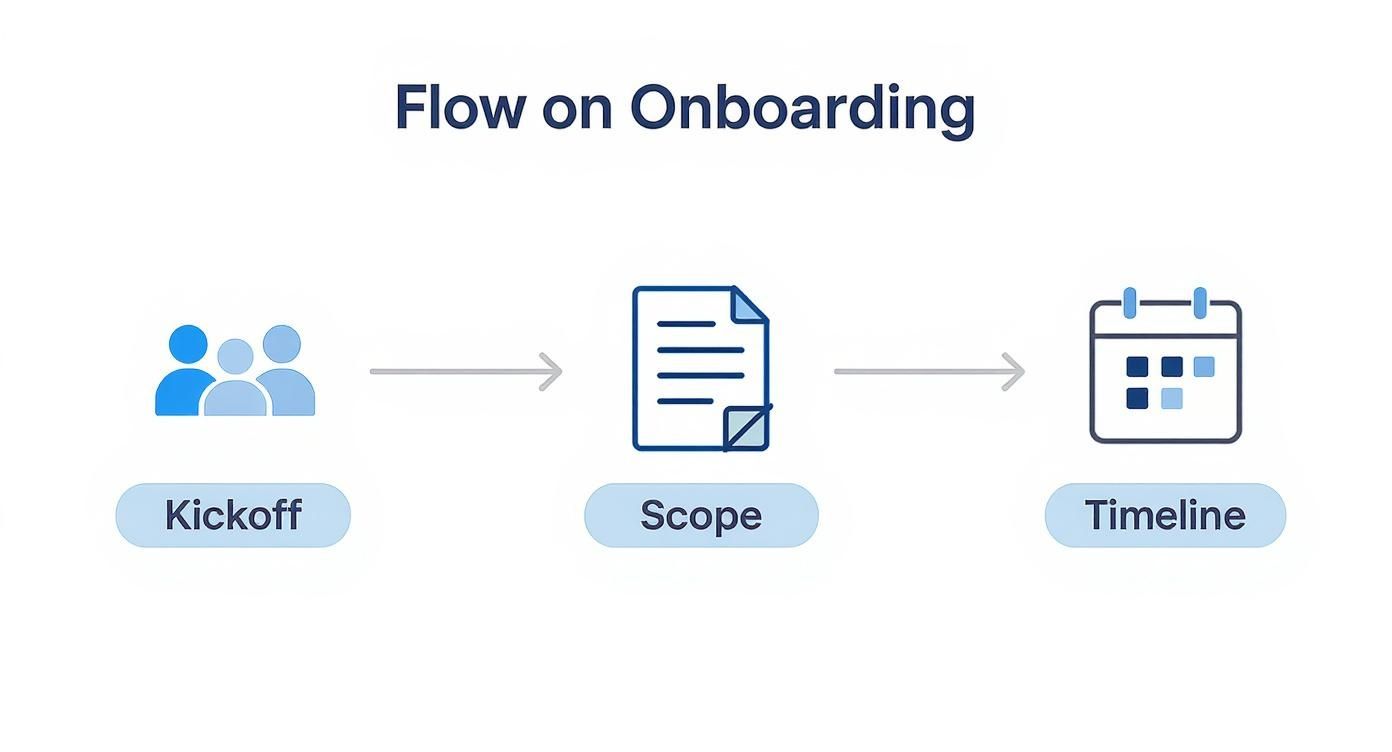
This diagram shows how a structured start—moving from a kickoff to a defined scope and timeline—builds the foundation needed to prevent chaotic feedback down the line.
From Vague Emails to Visual Clarity
The best way to fix this is to get feedback out of your inbox and onto the project itself. Visual feedback tools are designed for exactly this. They let clients point, click, and comment directly on a live website or a design mockup. The whole dynamic shifts from frustrating guesswork to collaborative problem-solving.
Imagine your client wants to change a button color and tweak some headline text. Instead of trying to describe it in an email ("the blue button on the about page, no the other blue button..."), they can just click on each element and leave a precise note. You get a clear, actionable task list with all the context you need—no more back-and-forth trying to figure out what they mean.
The goal isn't just to get feedback; it's to get actionable feedback. The more context you have, the faster you can make revisions, which is a direct path to a happier client and a healthier bottom line.
Practical Tips for a Smoother Revision Cycle
Adopting a tool is a huge step, but a truly seamless feedback process also relies on setting clear ground rules from the start. Here are a few battle-tested strategies to keep your revisions on track:
- Set Revision Limits: Be upfront in your contract about how many rounds of revisions are included. Two or three is a common standard. Clearly define what a "round" is, and state that any additional changes will be billed at your hourly rate. This simple step prevents the dreaded "death by a thousand tweaks."
- Use Video Walkthroughs: When you’re presenting a new design or explaining complex changes, record a short video with a tool like Loom. Walking the client through your work and explaining your rationale can answer their questions before they even ask them, leading to much more focused and relevant feedback.
- Batch Feedback Requests: Encourage clients to gather all their feedback for a specific milestone into one go. This stops the inefficient drip-feed of one-off changes and helps you move the project forward in clear, organized stages. For more tips on building better processes, check out other articles on the Reviseo blog.
It’s not just about making our lives easier; it’s good business. Even in massive industries like telecommunications, customer happiness is directly tied to revenue. One study found that telcos scored an average of only 5.7 out of 10 on a customer "Happiness" metric, linking higher scores directly to loyalty and growth. Systematically removing friction—like a confusing feedback process—is what sets successful agencies apart.
Mastering Proactive and Transparent Communication
Here's a hard-earned truth: most client anxiety doesn’t stem from project hiccups. It comes from the unknown. Radio silence is a trust killer, and it’s one of the easiest ways to torpedo a perfectly good client relationship.
When clients don't hear from you, their minds fill the void, and they almost always assume the worst. That's why consistent, proactive communication isn't just another box to check—it’s the best tool you have for building confidence and showing you're in complete control. The goal is to turn a nervous spectator into an informed, valued partner.
Implement a Weekly Progress Rhythm
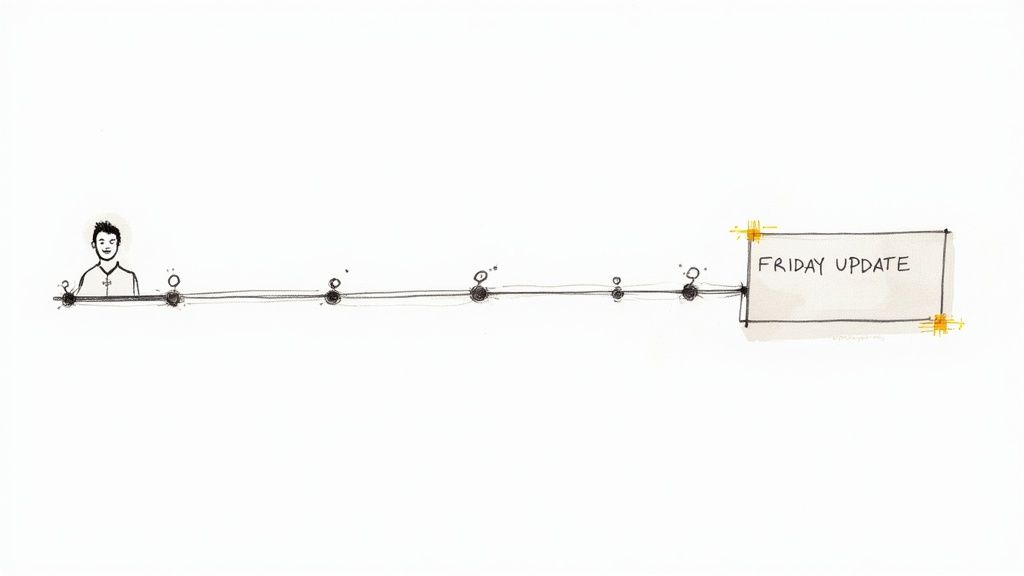
One of the most powerful things I ever did for my client relationships was establishing a predictable communication cadence. A simple, non-negotiable progress report sent every Friday afternoon can work miracles. Seriously.
This update doesn't have to be an epic novel. In fact, short and sweet is much better. Just make sure it clearly covers three key things:
- What you accomplished this week. (e.g., "Wrapped up the final homepage design and integrated the new brand fonts.")
- What’s on deck for next week. (e.g., "I'll be starting the homepage development and getting the staging site set up.")
- Any roadblocks or things you need from them. (e.g., "Still waiting on the final copy for the About Us page before I can build it out.")
This rhythm provides constant reassurance, even during those quiet weeks where there isn't much to "show." It proves you're on the job and keeps both of you accountable. It shifts communication from a reactive chore into a proactive habit.
An update that says, "No major visual changes this week, but we completed some crucial backend optimizations and are perfectly on track for next week's goals" is a thousand times better than silence. It replaces a client’s uncertainty with a feeling of stability.
How to Deliver Bad News
Sooner or later, every project hits a snag. A feature is more complex than you thought, a third-party service goes down, or some weird bug pops up out of nowhere. The way you handle this moment is what separates the pros from the amateurs.
Trying to hide a problem only guarantees it will blow up later. The real key is to deliver the bad news along with a clear plan of action.
- Be Immediate and Direct: Don't put it off. The moment you confirm an issue or delay, let the client know.
- Take Ownership: Acknowledge the problem head-on. Avoid making excuses or blaming others, even if external factors are involved.
- Explain the Impact: Tell them exactly how this affects the timeline, scope, or budget. No sugarcoating.
- Present a Solution: This is the most important part. Never bring up a problem without also bringing a proposed solution or at least a few options.
For example, instead of just saying, "We've hit a delay," try something like this: "Quick update: we've run into an unexpected bug with the API integration that will likely push our launch back by 3 days. My plan is to dedicate my entire day tomorrow to fixing it, and I'll send you another status report by the end of the day."
This approach doesn't just report a problem; it shows you're a proactive problem-solver, which is exactly what your clients are paying you for.
How to Measure and Systematically Improve Satisfaction
You can't fix what you can't see. If you're relying on gut feelings to gauge how happy your clients are, you're flying blind. The real key to turning good client service into a reliable, repeatable system is to stop guessing and start measuring.
For freelancers and small agencies, this doesn't mean you need some complicated, expensive enterprise software. A couple of simple metrics can give you incredible clarity, pointing you directly to the friction points in your process. This is how you make lasting improvements that actually elevate the client experience.
Choosing the Right Metrics for Your Business
To get started, two metrics are incredibly powerful for service businesses like ours: Customer Satisfaction Score (CSAT) and Net Promoter Score (NPS). They look at client happiness from two different, but equally important, angles.
- CSAT (Customer Satisfaction Score): Think of this as your in-the-moment temperature check. After a key milestone—like the final project handover—you ask a simple question: "How satisfied were you with this delivery?" on a 1-5 scale. It’s perfect for seeing how you did on a specific task.
- NPS (Net Promoter Score): This one measures long-term loyalty and the likelihood of referrals. It asks, "How likely are you to recommend our services to a friend or colleague?" on a scale of 0-10. This helps you identify your biggest champions (Promoters) and clients who might be unhappy (Detractors).
A great CSAT score tells you the project went well. A great NPS score tells you you've built a real relationship.
By using both CSAT and NPS, you get the full picture. One tells you about the success of a single project, while the other predicts your future referral pipeline.
Turning Feedback into Actionable Improvements
Collecting this data is just the first step. The real magic happens when you use it. Your goal should be to spot patterns in the feedback and turn those insights into concrete changes in how you work.
Let’s imagine you start noticing your CSAT scores consistently dip right after the revision phase. That’s not just a random bad review; it's a huge red flag. It’s telling you, loud and clear, that your feedback process is a major source of client frustration.
Now you have a clear mandate to fix it. Maybe you need to set firmer revision limits in your contract. Or maybe it's time to ditch the confusing email chains and adopt a visual feedback tool like Reviseo to make the whole process smoother.
It's also critical to understand that a satisfied client isn't automatically a loyal one. Recent research shows a growing gap between customers being happy with one transaction and their willingness to stick around long-term. Hitting the project goals is just the baseline. Building genuine trust—by being transparent and acting on their feedback—is what creates those long-term partnerships that build a business. You can see the full report on this satisfaction-loyalty gap and why it's so important.
When you start systematically measuring feedback and making targeted adjustments, you create a powerful cycle of continuous improvement. It’s how you stop reacting to fires and start proactively building a business clients can't wait to work with.
Got Questions? Let's Talk Client Satisfaction
Even with the best processes, you'll run into tricky client situations. It’s just part of the job. Here are some of the most common questions I hear from other freelancers and agency owners, along with my advice on how to handle them with confidence.
What’s the Best Way to Handle a Consistently Unhappy Client?
First off, take a deep breath and resist the urge to get defensive. Your initial gut reaction might be to protect your work, but that won't solve anything. Instead, get on a call with them with one goal in mind: listen.
Often, the root of the problem is a simple disconnect. Is it a communication breakdown? Did their expectations get misaligned somewhere back in the onboarding phase? Or is there a genuine issue with the work that needs to be fixed?
Jot down their specific points of frustration. Once you understand the issue from their perspective, you can propose a clear, actionable plan to address them. If you’ve given it your best shot and the relationship is still a constant struggle, sometimes the most professional thing to do is to part ways. It's better for everyone in the long run.
How Many Rounds of Revisions Should I Offer?
The industry standard usually lands somewhere between two and three rounds for each major deliverable. But honestly, the specific number isn’t what matters most. The real key is defining it crystal clear in your contract from day one.
Get specific. What counts as a "round"? I always define it as a single, consolidated list of changes. You also need to spell out what happens when they use up their included rounds. This is where you introduce your hourly rate for any additional work. Setting this boundary is one of the single most effective ways to prevent those endless, soul-crushing feedback loops.
Your contract isn't just a legal document; it's a communication tool. Use it to proactively set boundaries around revisions, scope, and feedback to prevent misunderstandings before they even have a chance to start.
How Can I Get More Testimonials from Satisfied Clients?
The secret is to make it ridiculously easy for them. The absolute best time to ask is right after a successful project launch or when you’ve hit a major milestone. Their excitement is at its peak, and they’re feeling great about the work you’ve done together.
Don't just send a generic email asking them to "leave a review." That’s way too vague and feels like homework.
Instead, send a personal email with a direct link to your preferred review platform, whether that’s Google, Clutch, or your own website. To make it even easier, give them a few prompts to get the ball rolling:
- What was the best part of our collaboration?
- What specific result or outcome did we help you achieve?
- Would you recommend our services to others? Why?
This simple approach removes all the friction and helps you get a detailed, compelling testimonial that will attract your next great client.
Ready to eliminate the guesswork and chaotic email threads from your revision process? Reviseo gives your clients a simple, visual way to provide feedback directly on their website, so you get clear, actionable tasks every time. Start streamlining your client feedback today.
Article created using Outrank